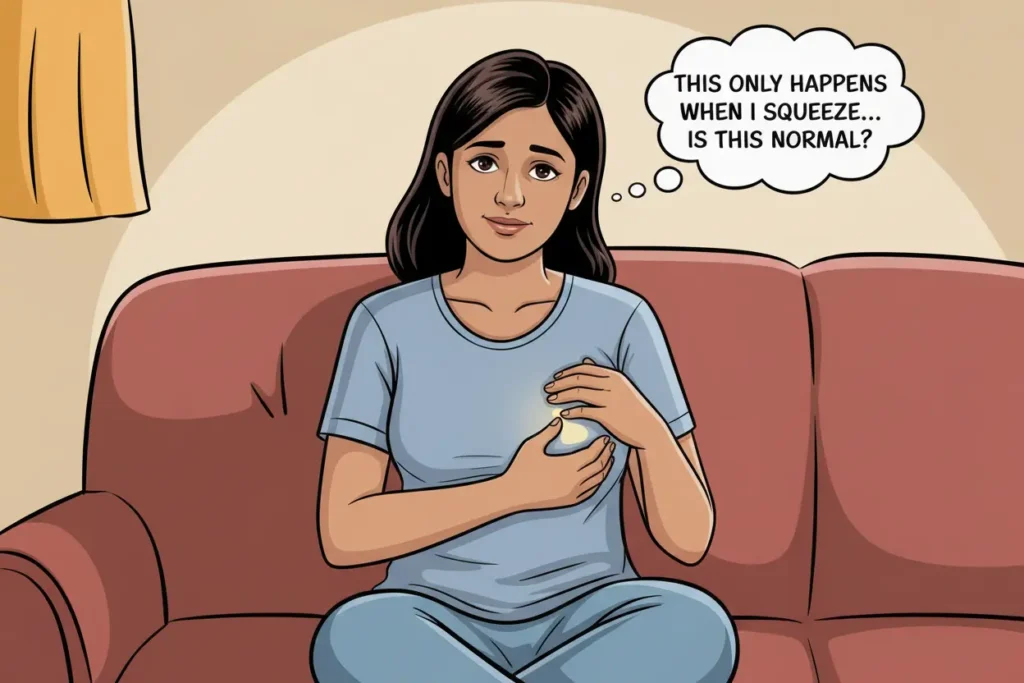
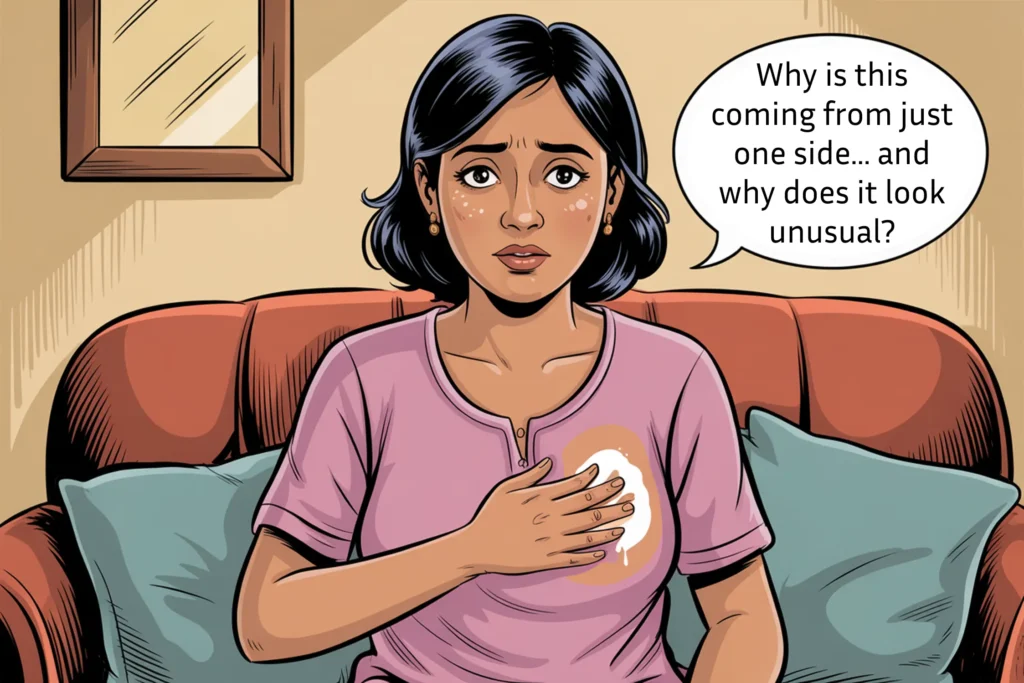
Nipple Discharge Isn’t “Normal” But It’s Usually Not Cancer Nipple discharge can feel alarming, especially when it happens unexpectedly. But in most cases, the cause is benign (non-cancerous). We help you understand why it’s happening – and treat it early with clarity, not fear. Book Nipple Discharge Consultation Nipple discharge is more common than most women realise It may appear as: Milky Bloody Brown Yellow or green Clear and watery The colour, pattern, and whether it appears spontaneously or only when pressed all matter. Understanding these signs helps you get the right care and peace of mind. Types of Nipple Discharge Physiological (Usually Normal) Discharge that happens only when you squeeze the nipple. Often milky or clear Comes from both breasts Common with hormonal changes or after breastfeeding Usually harmless Pathological (Needs Evaluation) Pain that does not follow your cycle. Often from one breast Clear, brown, or bloody May come from a single duct Could indicate duct changes, infection, or papilloma Common Causes of Nipple Discharge At Prajnam, papillomas are treated scarlessly with minimally invasive methods. Duct Ectasia (Blocked / Inflamed Ducts) Thick, sticky green or brown discharge caused by aging or blocked ducts. Intraductal Papilloma A small benign growth inside the milk duct that often causes bloody or clear watery discharge. Breast Infection / Abscess (Mastitis) Yellow or green discharge, breast pain, redness, or swelling. Hormonal Imbalance or Thyroid Disorders Can cause milky discharge even in women who are not breastfeeding. Medication-Related Discharge Certain medications (including hormonal pills or antidepressants) may stimulate the ducts. Breast Cancer (Rare) Only a small percentage of nipple discharges are cancer-related – but timely evaluation helps rule out risk and ensure early care. When Should You See a Doctor? A quick evaluation removes doubt – and brings clarity. You should get your nipple discharge assessed if you notice: Discharge that happens on its own Bloody or brown discharge A lump along with discharge Persistent discharge for more than 2–3 weeks Book Nipple Discharge Consultation Discharge from only one breast Clear watery discharge Redness, swelling, or pain Book Breast Pain Consultation Discharge that happens on its own Discharge from only one breast Bloody or brown discharge Clear watery discharge A lump along with discharge Redness, swelling, or pain Persistent discharge for more than 2–3 weeks Frequently Asked Questions ? Is nipple discharge a sign of cancer? Most nipple discharge is not cancer. But persistent or bloody discharge requires evaluation. Is bloody discharge serious? It may indicate a papilloma or (rarely) cancer.Early assessment is important. Can hormonal imbalance cause discharge? Yes. Thyroid or pituitary changes can cause milky discharge. Can breastfeeding cause nipple discharge? Yes — especially from blocked ducts or infections. What tests do I need? Your doctor may suggest an ultrasound, 3D mammogram, or duct evaluation based on symptoms. Still worried about nipple discharge? Let our breast expert help you find the cause – and the relief. Book Consultation Call Now Still worried about nipple discharge? Let our breast expert help you find the cause – and the relief. Book Consultation Call Now Breast Conditions Breast Pain Asymmetry Nipple Discharge Lump or Swelling Breastfeeding Difficulties Redness, Infection, or Pus Cancer Risk Assessment Quick Links Home About Us Contact Us Privacy & Policy T&C Contact Us +91 73037 66339 prajnambreastcare@gmail.com 39 & 40 Ground Floor, M2K Corporate Park, Sector 51, Gurgaon @ Copyright reserved with Prajnam & Designed and Created by Digital Ally Facebook Linkedin Youtube Instagram