Best Breast Specialist Doctor in Gurgaon | Prajnam Breast Clinic
Trusted by 11000+ women for Modern Diagnostics and Scarless Treatment of Breast Ailments under one roof

Fibroadenoma: Symptoms, Causes & Treatment
Discovered a lump in your breast and feeling worried? You are not alone. For many women, finding a breast lump immediately raises one frightening question: “Could this be cancer?”
The reassuring truth is that many breast lumps in younger women are not cancer, and one of the most common reasons is a condition called fibroadenoma.
A fibroadenoma is a non-cancerous (benign) breast lump and is often manageable. However, because breast lumps can feel similar regardless of the cause, getting the right evaluation is always important.
What Is a Fibroadenoma?
A fibroadenoma is a common benign breast lump made up of glandular and fibrous breast tissue.
It is one of the most common causes of breast lumps in younger women, especially between the ages of 15 and 35.
Fibroadenomas are not breast cancer and, in most cases, do not increase the risk of developing cancer.
These lumps may:
- Develop in one or both breasts
- Stay small or grow larger over time
- Remain stable or sometimes shrink naturally
- Feel smooth and movable
Many women discover a fibroadenoma accidentally while bathing, dressing, or during self-examination.
What Does a Fibroadenoma Feel Like?
A fibroadenoma often feels:
- Smooth and clearly defined
- Firm or rubbery
- Easy to move under the skin
- Round or oval-shaped
Many women describe it as feeling like a small marble moving inside the breast.
Unlike some breast conditions, fibroadenomas are often painless, though larger lumps may occasionally cause discomfort.
Common Symptoms of Fibroadenoma
Some women may have no symptoms, while others notice:
A Breast Lump
Usually:
- Smooth
- Clearly outlined
- Easy to move
- Painless
Mild Breast Pain or Tenderness
Some fibroadenomas may feel more noticeable or tender during hormonal changes.
Feeling of Fullness
Larger fibroadenomas may create mild heaviness or pressure in the breast.
Changes Around Periods
Hormonal fluctuations may sometimes make the lump feel more noticeable before menstruation.
What Causes Fibroadenoma?
The exact cause is not always known, but hormonal changes, especially estrogen, are believed to play a role.
Fibroadenomas are more common during:
- Teenage years
- Reproductive age
- Pregnancy
- Hormonal fluctuations
In some women, fibroadenomas may shrink after menopause.
Is Fibroadenoma Cancer?
No. Fibroadenoma is not breast cancer.
It is a benign condition, meaning it is non-cancerous. However, because some breast lumps can feel similar, it’s important not to assume every lump is harmless without proper evaluation.
How Is Fibroadenoma Diagnosed?
A breast specialist may recommend a triple assessment approach, which includes:
Clinical Breast Examination – To assess the lump’s size, texture, and mobility.
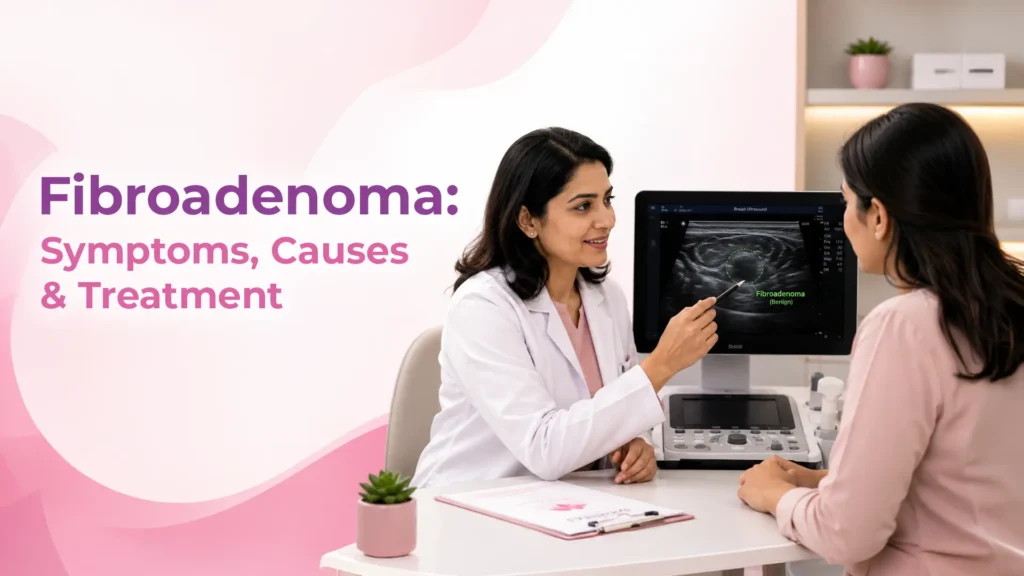
Breast Ultrasound – Commonly preferred in younger women to understand whether the lump is solid or fluid-filled.
Mammography or Biopsy (If Needed) – Depending on age, symptoms, or findings, further evaluation may sometimes be advised.
Treatment for Fibroadenoma
Treatment depends on the size, symptoms, and growth of the lump.
Observation & Monitoring: Many fibroadenomas only require regular follow-up if they are small and stable.
Symptom Relief: If discomfort is present, supportive treatment may help.
Minimally Invasive or Scarless Removal: In selected cases, larger or bothersome fibroadenomas may be treated through advanced minimally invasive options.
The Bottom Line
Finding a breast lump can feel overwhelming, but fibroadenoma is one of the most common and non-cancerous causes of breast lumps, especially in younger women.
The key is not to panic, but also not to ignore it. Early evaluation helps bring clarity, reassurance, and confidence about your breast health.
Noticed a breast lump? Getting it checked early can help you understand what it is and whether it needs treatment or simple monitoring.
Meta Keyword Intent Mix:
fibroadenoma, fibroadenoma symptoms, fibroadenoma treatment, fibroadenoma causes, breast fibroadenoma, non cancerous breast lump, movable breast lump, benign breast lump, fibroadenoma diagnosis, breast specialist Gurgaon