Best Breast Specialist Doctor in Gurgaon | Prajnam Breast Clinic
Trusted by 11000+ women for Modern Diagnostics and Scarless Treatment of Breast Ailments under one roof

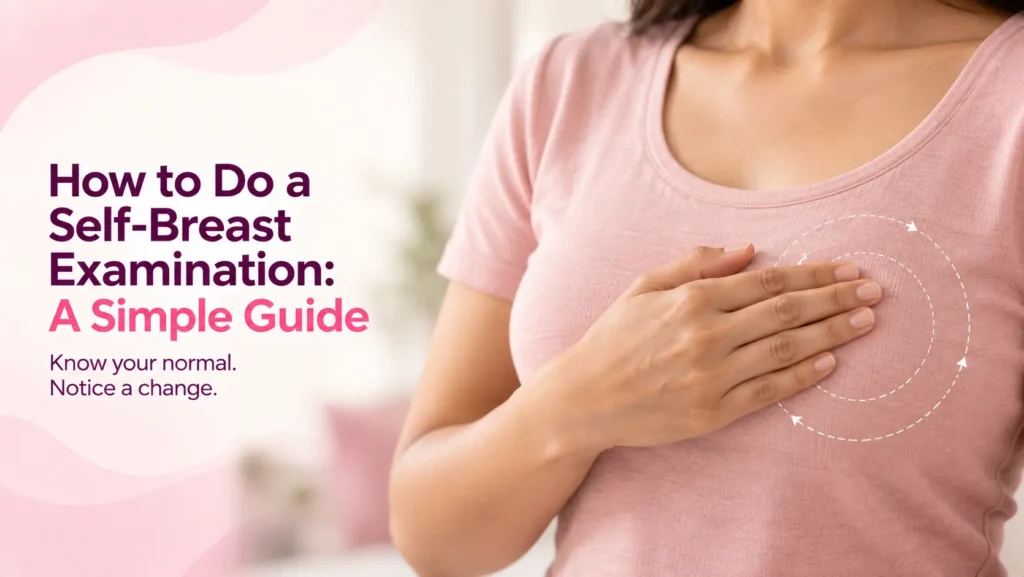
How to Do a Self-Breast Examination: Step-by-Step Guide
You see and feel your breasts every day, but would you notice when something changes?
A breast self-examination can help you become familiar with how your breasts normally look and feel. The goal is not to diagnose a breast condition yourself. It is to recognise a new or unusual change and know when to consult a breast doctor.
Here is a simple way to check your breasts.
Step 1: Look at Your Breasts in the Mirror
Stand in front of a mirror with your shoulders straight and arms relaxed by your sides.
Look at both breasts and notice their usual size, shape and appearance.
Watch for a new change such as:
- visible swelling or change in shape
- skin dimpling or puckering
- persistent redness
- a nipple that has recently turned inward
- unusual nipple discharge
Next, raise both arms and look for the same changes.
Step 2: Feel Your Breasts While Standing
Using the pads of your three middle fingers, gently feel your breast tissue.
Follow a consistent pattern so that you cover the entire breast rather than checking only one area. Use light, medium and firmer pressure to feel tissue at different depths.
Remember to check the area extending towards your armpit as well.
You can do this in the shower when your fingers may move more easily across wet skin.
Step 3: Check Again While Lying Down
Lie down and place a pillow under your right shoulder. Put your right arm behind your head and use your left hand to examine your right breast.
Repeat on the other side.
Notice whether you feel a new lump, thickened area or something distinctly different from the surrounding breast tissue.
Step 4: Know What Deserves Medical Attention
Finding something different does not automatically mean breast cancer. Many breast changes have benign causes.
However, a new lump, persistent breast pain, nipple discharge, nipple retraction, skin changes or swelling should be evaluated.
A breast specialist can assess the change and determine whether clinical examination, breast ultrasound, diagnostic mammography or another investigation is appropriate. Women requiring breast lump treatment should avoid trying to identify the cause through touch alone.
Self-Checking Is Awareness, Not Diagnosis
There is no single “perfect” breast texture. What matters is becoming familiar with your normal and recognising a change.
Self-examination also does not replace mammography or other recommended breast screening. Some breast abnormalities can be detected through imaging before they can be felt.
At Prajnam Breast Centre, women can access breast specialist consultation, breast cancer risk assessment, 2D and 3D mammography, advanced breast ultrasound and further diagnostic evaluation under one roof.
Looking for a breast doctor or breast check after noticing a change? Get it assessed rather than waiting to see whether it disappears on its own.